
Passing KYC does not guarantee that your next crypto deposit will be accepted without questions. The real challenge is proving the provenance of the specific funds under review.
Core finding: The strongest defense against a secondary KYC freeze is not simply owning “clean crypto.” It is maintaining a continuous, explainable chain of provenance from the original economic event to the wallet currently depositing the assets.
Why a Second KYC Review Is Different
Traditional KYC asks: “Who are you?” A secondary transaction review asks a different question: “Where did this particular money come from, who controlled it before you received it, and can you prove that history?”
That distinction explains why an account can remain fully identity-verified while a particular deposit is temporarily restricted. Modern crypto compliance is increasingly event-driven. Large deposits, unusual transaction patterns, exposure to unfamiliar entities, interaction with high-risk services, or funds arriving through complex wallet paths can trigger additional scrutiny.
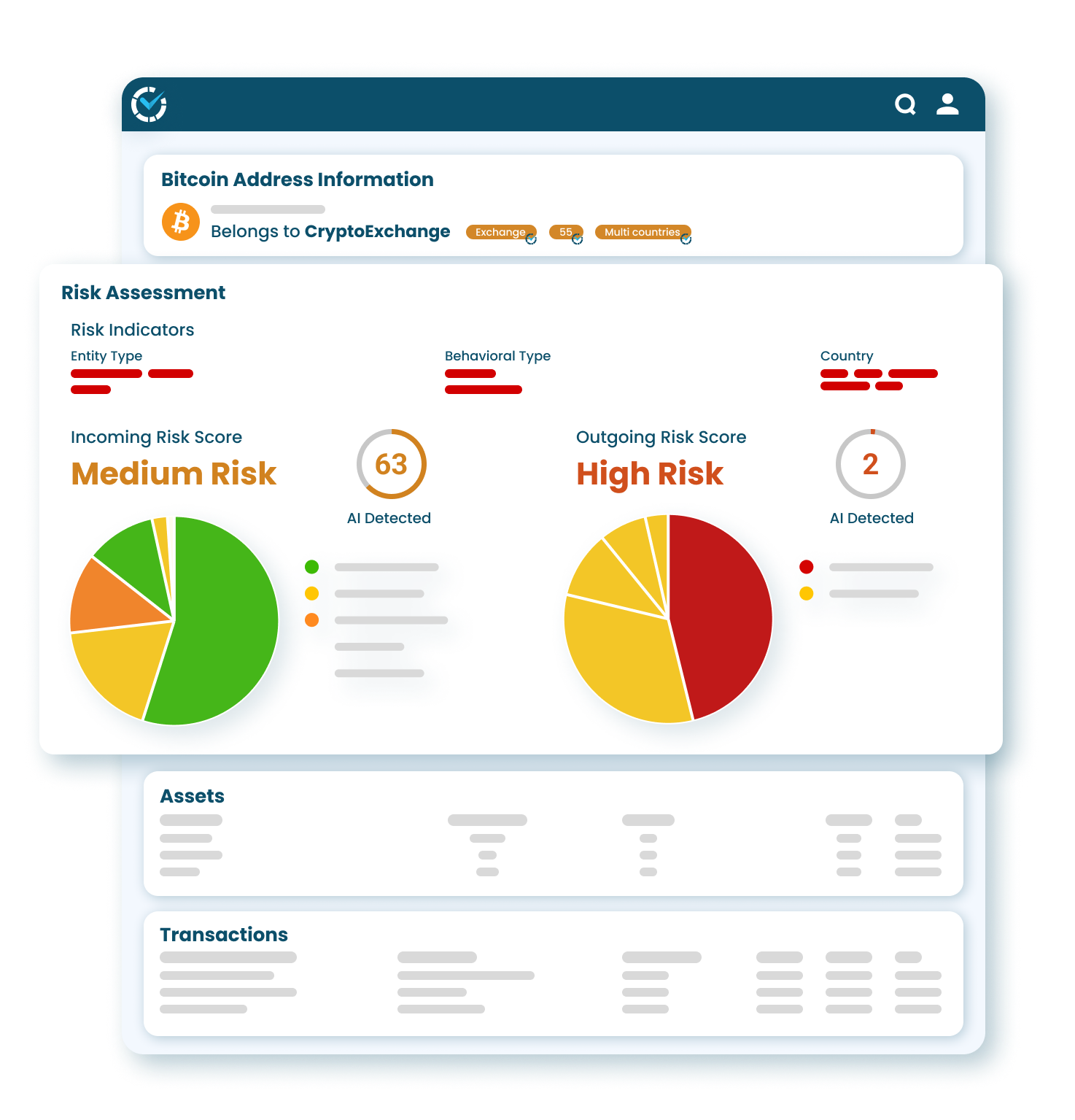
FATF’s virtual-asset red-flag framework identifies source-of-funds concerns, high-risk jurisdictions, mixers, sanctioned addresses and poorly regulated VASPs among factors that can warrant additional examination. It also stresses that individual indicators should be evaluated in context rather than treated as automatic proof of wrongdoing.
Important: A secondary KYC review does not necessarily mean the exchange believes your funds are illicit. It may simply mean that the transaction history is inconsistent with the information already available about your account.
The Real Problem: Compliance Sees a Graph, Users See a Wallet
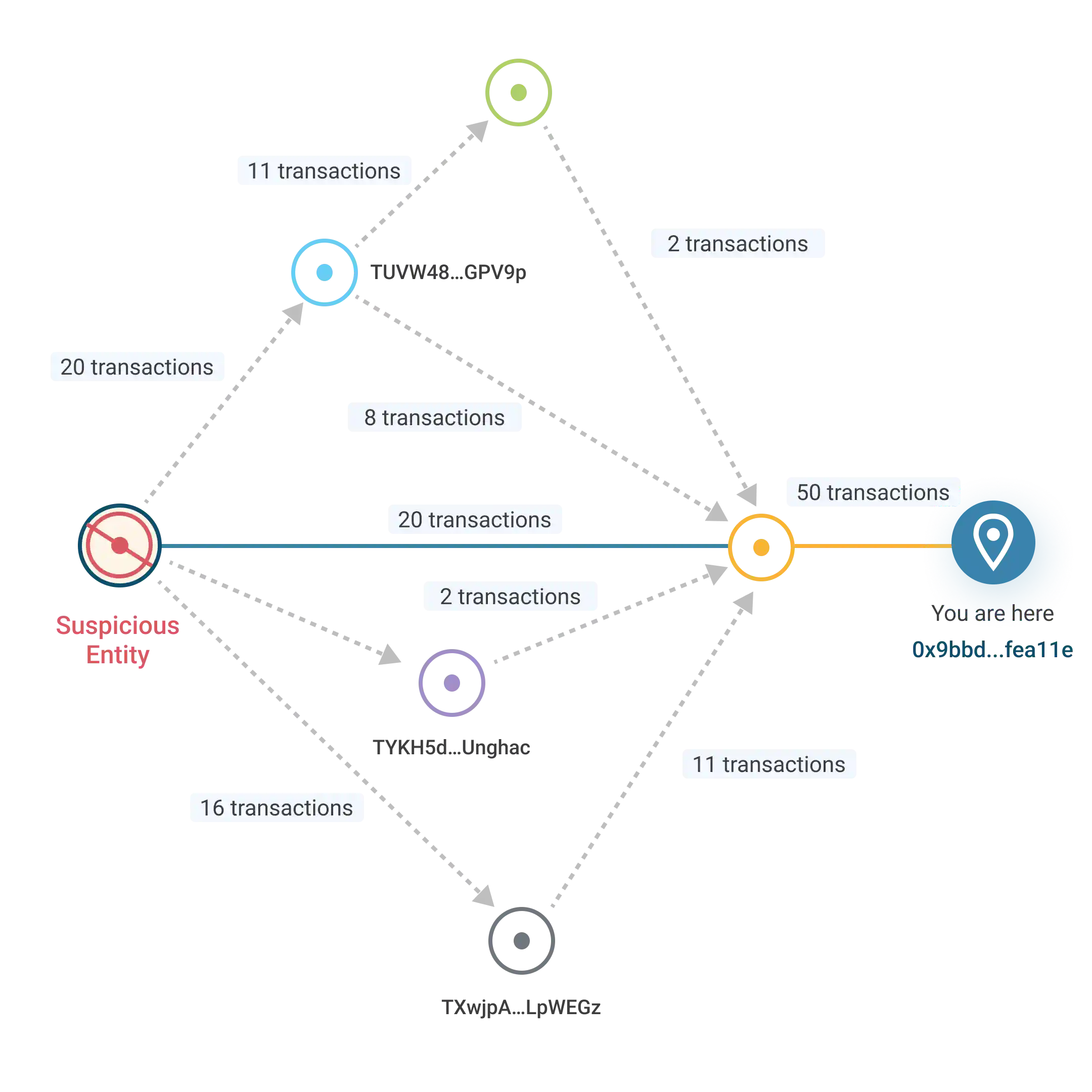
Most users think about ownership as a simple statement: “This wallet belongs to me.” Compliance systems may instead evaluate the transaction graph surrounding that wallet.
To the user, this may simply be “my money.” To a compliance system, it can represent several separate relationships that need to be reconciled.
This creates an important paradox: crypto can be more transparent than traditional cash, but that transparency also preserves historical relationships that users may have forgotten.
The 2026 Shift: From On-Ramp KYC to Secondary-Market Surveillance
Stablecoins and self-custody are pushing compliance beyond the traditional “exchange → customer” model. FATF’s March 2026 targeted report specifically highlights risks involving stablecoins, peer-to-peer transfers and unhosted wallets, and recommends stronger capabilities for monitoring secondary-market activity.
This matters because the exchange may increasingly care not only about where you purchased the asset, but what happened to it afterward.
Key insight: A self-custody deposit is not inherently suspicious. It is simply a transaction where the exchange may have fewer direct records connecting the current wallet to the original acquisition event.
Our Five-Layer Provenance Chain
Instead of treating source of funds as a folder full of screenshots, we recommend treating it as a five-layer financial provenance chain.
Economic Origin
Where did the purchasing power originate? Salary, business revenue, investment returns, inheritance, asset sale or documented loan.
Acquisition Rail
How did the money enter crypto? Bank transfer, regulated exchange purchase, brokerage conversion or another documented acquisition route.
On-Chain Ownership
Can the wallet holding the funds be connected to you through withdrawal records, wallet history or appropriate cryptographic proof?
Transformation History
What happened through swaps, bridges, staking, DeFi, NFT sales or other transactions?
Current Deposit
Can the exact transaction being reviewed be reconciled with the preceding history?
One Coherent Narrative
The objective is not to submit every transaction you have ever made. It is to make the relevant financial history independently understandable.
The Source-of-Funds Evidence Hierarchy
| Evidence | What It Proves | Strength |
|---|---|---|
| Bank statement / financial record | Economic origin of funds | High |
| Exchange trade & withdrawal record | Crypto acquisition and movement | High |
| Blockchain transaction hash | Movement of assets | High for transaction verification |
| Wallet signature | Control of a wallet address | High when applicable |
| Written transaction chronology | Purpose and context | Medium–High |
| Screenshot | Visual evidence of activity | Supporting |
The critical distinction is between ownership evidence and provenance evidence. A wallet screenshot may show that an address appears in your interface. It does not necessarily explain how the funds arrived there or establish the economic origin of those funds.
The Wallet Ownership Gap
Imagine an exchange asks why 250,000 USDC arrived from a self-custody wallet that has never interacted with your verified account. A screenshot of MetaMask is unlikely to explain the entire story.
A stronger package could connect the wallet to your account through an exchange withdrawal record, a complete wallet history, the deposit TXID, and where technically appropriate, a signed message demonstrating control of the address.
Practical rule: If a self-custody wallet holds significant value, maintain a private provenance record before you need it. The best time to document the transaction path is when you still remember why every transaction happened.
Five Transaction Patterns That Commonly Create Questions
1. Large value entering a previously quiet wallet
A sudden increase in activity can be unusual even when the underlying funds are legitimate. The issue is often the deviation from historical behavior rather than the absolute amount.
2. Multiple hops without obvious economic purpose
Multiple wallets may have legitimate operational or custody reasons, but unnecessary hops increase the number of relationships that need to be reconciled.
3. Third-party transfers
Payments from friends, clients, employers, DAOs, OTC counterparties or business partners can require additional explanation. “Someone sent it to me” is not a complete source-of-funds explanation.
4. P2P and unhosted-wallet activity
FATF’s 2026 stablecoin report specifically identifies P2P activity involving unhosted wallets as an area requiring stronger risk controls.
5. Exposure to high-risk services
Transactions involving sanctioned entities, mixers, darknet markets, ransomware-related addresses, fraud clusters or poorly regulated VASPs can attract enhanced scrutiny.
The 72-Hour Freeze Response
Stop creating complexity
Do not rapidly move disputed funds between wallets simply because you are worried about the freeze.
Preserve original evidence
Export exchange histories, bank records, trade confirmations, wallet histories and transaction hashes.
Identify the trigger
Find the exact deposit, withdrawal, counterparty or transaction being reviewed.
Trace backward
Start with the frozen transaction and reconstruct the chain backward until the economic origin is identified.
Write a one-page chronology
Explain the date, asset, platform, wallet and purpose of every important step.
Submit targeted evidence
Organize documents around the questions the compliance team actually asked rather than sending an unstructured archive.
Never fabricate invoices, contracts, screenshots or explanations. If a legitimate transaction is difficult to explain, acknowledge the gap and provide the strongest original evidence available.
The Crypto Provenance Packet
| Section | Recommended Records | Purpose |
|---|---|---|
| Identity | Existing KYC information | Connects the review to the account holder |
| Economic source | Bank statements, payroll, business revenue, investment records | Explains original purchasing power |
| Acquisition | Exchange deposits, trades and withdrawals | Shows how fiat became crypto |
| Wallet ownership | Addresses, withdrawal records, signatures where appropriate | Connects blockchain addresses to the user |
| On-chain history | TXIDs, swaps, bridges, staking and DeFi records | Explains asset transformation |
| Current deposit | Destination exchange record and TXID | Reconciles the reviewed transaction |
| Explanation | One-page chronology | Converts raw data into a coherent financial narrative |
The Provenance Coverage Ratio (PCR)
We propose a simple internal metric for users preparing for source-of-funds reviews. PCR is not a regulatory standard or an exchange-defined score.
For example, if $200,000 is under review and $190,000 can be connected to documented bank records, exchange activity, trading profits and client payments, the user’s internal PCR would be 95%.
The Provenance Gap Is More Important Than Balance Size
A $1 million balance is not automatically more problematic than a $50,000 balance. What matters is how easily the value can be explained.
User A: $1 million originated from a documented brokerage account, moved to a regulated exchange, converted to BTC, withdrawn to a known hardware wallet and held for two years.
User B: $50,000 moved through six wallets, two bridges and several swaps, with no records explaining the reason for the intermediary transactions.
User A has a larger balance but a relatively simple provenance chain. User B has a smaller balance but a larger explanatory gap.
The better question is not “How much crypto do I have?” It is “How many unexplained edges exist in the transaction graph connecting my crypto to its economic origin?”
Why Stablecoins Deserve Extra Attention in 2026
Stablecoins have become a central part of crypto payments, trading and settlement. Their scale also means they increasingly appear in compliance investigations.
FATF reported that stablecoins had grown beyond 250 instruments by mid-2025 with market capitalization above $300 billion. Chainalysis reported that stablecoins accounted for 84% of illicit transaction volume in 2025. These figures should not be interpreted as evidence that stablecoins are inherently illicit; their dominant share also reflects their enormous legitimate utility and transaction volume.
The user-level implication is simple: do not assume that a USDC or USDT transfer is “simple money” merely because its price is stable. A stablecoin can pass through exchanges, OTC desks, bridges, DeFi protocols, P2P counterparties and multiple self-custody wallets before reaching its destination.
What Not to Do During a Freeze
| Bad Response | Why It Can Make Things Worse | Better Response |
|---|---|---|
| Move the funds repeatedly | Creates additional transaction edges | Preserve the current state and reconstruct history |
| Send hundreds of screenshots | Creates noise | Provide indexed, relevant evidence |
| Invent missing documents | Creates a separate credibility problem | Explain the gap honestly |
| Delete wallet records | Does not remove blockchain history | Preserve original records |
| Only show the final wallet | Does not explain origin | Trace the asset backward |
Source of Funds vs. Source of Wealth
| Concept | Question | Example |
|---|---|---|
| Source of Wealth | How was your overall wealth accumulated? | Business ownership, investment returns or long-term employment |
| Source of Funds | Where did the specific money under review come from? | Brokerage liquidation → bank → exchange → USDC deposit |
A Practical Transaction-Risk Model
There is no universal public formula used by every exchange, but users can think about transaction complexity through four interacting dimensions:
A large deposit from an unfamiliar self-custody wallet that has exposure to a high-risk entity and represents a major departure from historical behavior can naturally create more questions than a routine transfer from a previously used regulated exchange.
The 10-Minute Pre-Deposit Test
Before depositing a significant amount into a centralized exchange:
When Professional Help Makes Sense
Most ordinary source-of-funds requests can be handled by the account holder if the records are organized. More complicated cases may justify professional assistance, particularly where funds involve inheritance, business transactions, OTC trading, complex DeFi strategies, multiple jurisdictions, asset sales, corporate structures, sanctions exposure or a substantial unexplained transaction.
Professional assistance should focus on evidence reconstruction and truthful explanation, not on circumventing an exchange’s compliance controls.
What the Data Says About the Direction of Crypto Compliance
Chainalysis estimated that illicit addresses received at least $154 billion in cryptocurrency during 2025, while TRM Labs independently estimated approximately $158 billion in illicit crypto volume. Their methodologies differ, so these figures should be treated as separate estimates rather than combined measurements.
The more important structural trend is the increasing sophistication of transaction monitoring. FATF’s 2026 stablecoin report emphasizes secondary-market activity, unhosted wallets and cross-chain risk. As analytics systems become better at reconstructing transaction relationships, documentation quality becomes part of financial security.
New definition of “clean crypto”: Crypto whose ownership, economic origin and relevant transaction history can be explained with credible evidence appropriate to the circumstances.
Final Takeaway
The biggest mistake users make with secondary KYC is treating it as a documentation problem that starts when an exchange sends an email.
It actually begins much earlier.
Every time you move assets from an exchange to a personal wallet, use a bridge, interact with DeFi, receive funds from another person, sell an asset, receive business revenue or convert fiat into crypto, you create another link in your financial provenance chain.
Most of those links will never matter. But when an exchange asks about a $100,000, $500,000 or $1 million transaction, those historical links can suddenly become the difference between a straightforward review and a prolonged investigation.
The strongest strategy is not to “beat KYC.” It is to make legitimate financial history easy to verify.
Keep the bank record. Keep the exchange record. Keep the TXID. Keep the wallet history. Record why the transaction happened. When the path becomes complicated, document it while you still remember it.
Detailed Data Sources & Research References
| Source | Publication / Dataset | Key Relevance |
|---|---|---|
| FATF | Targeted Report on Stablecoins and Unhosted Wallets, 2026 | Stablecoin growth, unhosted wallets, P2P risk and secondary-market monitoring |
| FATF | Virtual Assets: Red Flag Indicators | Source-of-funds red flags, mixers, sanctioned addresses and high-risk VASPs |
| Chainalysis | 2026 Crypto Crime Report | 2025 illicit flows and stablecoin-related transaction data |
| TRM Labs | 2026 Crypto Crime Report | Independent estimate of illicit crypto volume in 2025 |
| FinCEN | Convertible Virtual Currency AML Guidance | AML, monitoring, reporting and recordkeeping framework |
FATF — Targeted Report on Stablecoins and Unhosted Wallets
FATF — Virtual Assets Red Flag Indicators
Chainalysis — 2026 Crypto Crime Report
FinCEN — Convertible Virtual Currency AML Framework
Research note: This article is educational information, not legal, tax or financial advice. KYC procedures, account restrictions, documentation requirements and appeal mechanisms vary by exchange and jurisdiction. FATF, Chainalysis and TRM Labs use different methodologies; their estimates should not be interpreted as directly interchangeable.
